
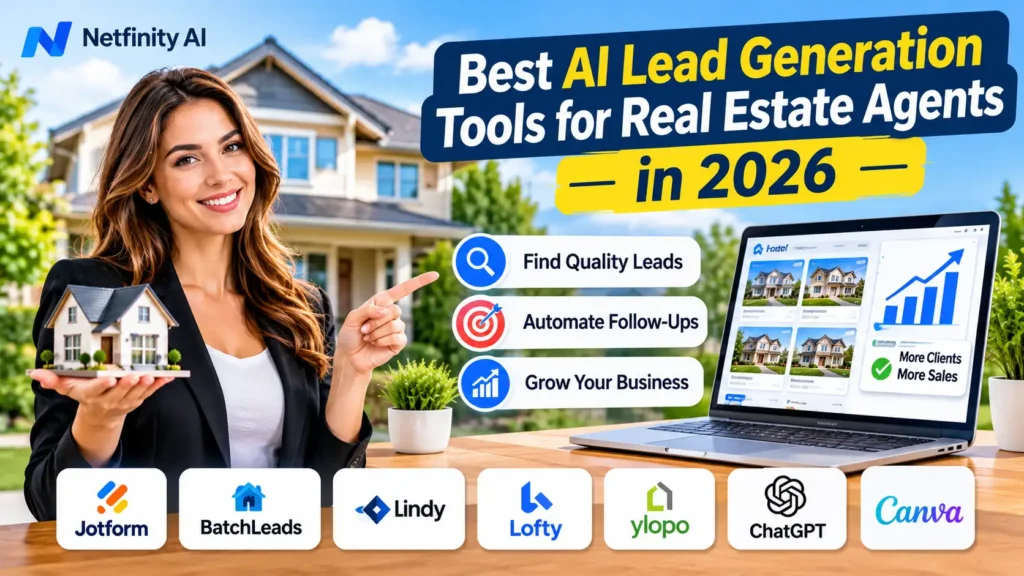
Best AI Lead Generation Tools for Real Estate Agents in 2026
Finding potential buyers and sellers is a big part of working in real estate. But finding a contact is only the beginning. Agents also need to understand what people are looking for, respond to inquiries, arrange viewings, and stay in touch without spending the entire day managing messages.
That becomes difficult when leads come from different places. One person fills out a website form, another sends a Facebook message, and someone else calls after seeing a property listing. Without a reliable system, it is easy to miss an inquiry or forget to follow up.
AI lead generation tools for real estate agents can make parts of this process easier. Depending on the platform, they can help identify potential prospects, collect inquiries, organize contact information, prepare follow-up messages, and support property marketing.
However, not every tool does all these things. Some focus on property data, others on customer relationship management (CRM), and some are simply useful for creating marketing content.
In this guide, we’ll look at seven tools, where each one fits, what it can actually help with, and what agents should consider before paying for a subscription.
Quick Comparison: Best AI Lead Generation Tools for Real Estate Agents
| Tool | Best for | Main purpose |
|---|---|---|
| Jotform AI Agents | Capturing and qualifying inquiries | Forms, AI conversations, lead routing |
| BatchLeads | Property-based prospecting | Property search, contact data, lead lists |
| Lindy | Workflow automation | Connecting repetitive tasks across apps |
| Lofty | Real estate CRM | Lead management and marketing |
| Ylopo | Real estate marketing | Lead generation and nurturing |
| ChatGPT | Outreach and research | Writing, planning, and content preparation |
| Canva | Property promotion | Listing graphics and marketing materials |
These platforms serve different purposes. A solo agent who needs to organize website inquiries may not need the same software as an investor searching property records or a brokerage managing a large sales team.
What Is AI Lead Generation in Real Estate?
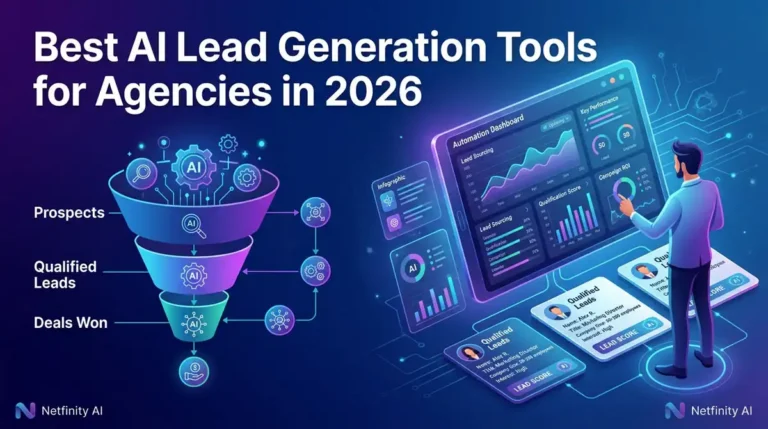
AI lead generation uses artificial intelligence and automation to support the process of finding, capturing, organizing, and following up with potential clients.
In real estate, that might mean collecting information from a property inquiry, asking a few preliminary questions, organizing leads by location or budget, or preparing a personalized follow-up message.
Some platforms also use property information and other available data to help users identify prospects who match specific criteria.
A typical workflow might look like this:
- A potential buyer or seller discovers an agent through a website, advertisement, or social media post.
- The person submits an inquiry or starts a conversation.
- A form, chatbot, or CRM collects the relevant information.
- The system organizes the inquiry and helps determine the next step.
- The agent follows up and decides whether to arrange a consultation or property viewing.
The purpose is not to remove the agent from the process. It is to reduce repetitive work so the agent has more time for conversations and client relationships.
1. Jotform AI Agents: Best for Capturing and Qualifying Inquiries
An inquiry form can be more useful than it sounds. If someone is interested in buying a property, an agent usually needs more information than just a name and email address.
Jotform offers AI Agents and form-based workflows that can help collect information and guide people through an inquiry process.
For example, an agent could create a buyer inquiry form that asks about:
- Preferred location
- Property type
- Approximate budget
- Number of bedrooms
- Expected buying timeline
- Whether the person wants to arrange a viewing
A similar form could be created for homeowners interested in selling.
Jotform’s real estate solutions also include templates and options for connecting inquiries with forms, calendars, and other workflows. The exact capabilities depend on the selected plan and configuration.
Best for: Agents who want a more organized way to collect and qualify online inquiries without building a custom system.
What makes it useful: It gives prospects a structured way to explain what they need before the agent gets in touch.
Limitations: A form or chatbot does not automatically bring visitors to your website. You still need a source of traffic and a good reason for people to submit their information. AI responses should also be checked to ensure they do not provide inaccurate property details.
See Jotform’s AI lead generation solutions for real estate for current features and plan information.
2. BatchLeads: Best for Property-Based Prospecting
Some real estate professionals spend a considerable amount of time researching properties and building prospect lists. That is where a property-focused platform can be useful.
BatchLeads provides property search, lead-list management, available owner contact information, and property-related filters. It also offers AI features such as BatchRank AI, which the company describes as a way to score properties using potential selling signals.
For example, an investor might want to research properties in a particular neighborhood. An agent may want to build a list based on property type, ownership information, or other available criteria.
BatchLeads helps organize this type of research in one place instead of relying entirely on manual searches.
Best for: Real estate investors, property professionals, and agents whose prospecting depends on property data.
Pricing: BatchLeads lists its Growth plan at $119 per month with monthly billing. Professional and Scale plans are available at higher prices. Additional AI features may have separate charges.
What makes it useful: Property filters and contact information can make it easier to build a targeted prospect list.
Limitations: A property record does not prove that the owner wants to sell. Data coverage and accuracy can vary, and agents should check whether the platform supports their market and intended use.
You can review the current plans and features on the official BatchLeads pricing page.
3. Lindy: Best for Automating Repetitive Follow-Up Tasks
Lead generation involves plenty of small tasks that have nothing to do with actually speaking to a client.
An agent may need to summarize an inquiry, prepare a response, update a CRM, create a reminder, or organize information from several applications. Repeating those steps for every prospect takes time.
Lindy is a general-purpose AI workflow platform that can connect supported applications and automate multi-step tasks.
For example, an agent could explore a workflow that reads a new inquiry, summarizes the prospect’s requirements, prepares a draft response, and creates a follow-up task.
The system’s usefulness depends on the applications it can connect to and how the workflow is configured.
Best for: Agents who already use several business applications and want to reduce repetitive administrative work.
What makes it useful: It offers flexibility beyond simple chatbot conversations.
Limitations: It is not a real estate-specific prospect database. Setting up more advanced workflows may also require some experimentation. Review important messages before sending them, particularly when they contain property information or commitments to clients.
Lindy currently offers a free option with limited credits and paid plans based on usage. Check its official pricing page before choosing a plan.
4. Lofty: Best for Real Estate CRM and Lead Management
Getting inquiries is not particularly useful if there is no consistent way to manage them.
A CRM helps agents keep track of prospects, communication history, follow-up tasks, and opportunities. Lofty is a real estate-focused platform that combines CRM functionality with marketing and lead-generation features.
Its platform includes customizable IDX websites, marketing automation, social media tools, and digital advertising options, depending on the package.
This can be useful for agents and teams who want to manage more of their lead-generation process through one system.
Best for: Real estate agents, teams, and brokerages looking for a specialized CRM and marketing platform.
What makes it useful: It brings several real estate business activities together instead of requiring agents to manage everything through separate tools.
Pricing: Lofty provides different packages for agents, teams, brokers, and enterprise customers. Pricing is available by requesting a quote. Some advertising and lead-generation services may involve additional management fees.
Limitations: A full real estate platform may be more than an independent agent needs. Before signing up, ask for a demonstration of the exact features included in your proposed package.
Visit Lofty’s official pricing and packages page to compare its current offerings.
5. Ylopo: Best for Real Estate Marketing and Lead Nurturing
Ylopo is another real estate-focused platform worth considering, particularly for agents and teams looking at digital marketing and lead nurturing.
The reason to consider a specialized platform is simple: real estate marketing has its own requirements. Agents need to promote listings, reach potential buyers, and maintain contact with prospects who may not be ready to make a decision immediately.
Rather than relying only on a general-purpose AI assistant, a real estate marketing platform may provide a more integrated approach to campaigns and follow-up.
Best for: Real estate teams evaluating specialized marketing and lead-generation services.
What to check before buying:
- Which advertising channels are supported?
- What is included in the quoted subscription?
- Are advertising costs separate?
- How are incoming leads delivered to agents?
- What follow-up features are included?
- Can the platform measure appointments and conversions?
Limitations: A marketing platform cannot guarantee a particular number of qualified leads or closed transactions. Results depend on location, budget, campaign quality, and the agent’s follow-up process.
Check Ylopo’s official website for current products and pricing information.
6. ChatGPT: Best for Research, Outreach, and Listing Content
ChatGPT is not a dedicated real estate lead database. It will not automatically give an agent a verified list of homeowners who want to sell.
Its value is different. It can help agents prepare the communication and marketing materials that support their lead-generation efforts.
For example, an agent can use ChatGPT to:
- Draft a follow-up email after a property inquiry.
- Create different versions of a property description.
- Prepare questions for a buyer consultation.
- Write social media posts about a local neighborhood.
- Develop a first-time buyer checklist.
- Plan a weekly property marketing calendar.
The quality of the result depends on the information provided. If an agent gives accurate property details and explains the intended audience, ChatGPT can help create a more relevant draft.
Best for: Independent agents and small teams that need help with writing, research, and marketing preparation.
Limitations: Always verify property information, prices, neighborhood details, and market claims. AI-generated content can contain mistakes, and confidential client information should not be shared unless permitted by the applicable service and business policies.
You can explore ChatGPT to see the current plans and features.
For agents who want to turn listing information into promotional videos, our guide to the best AI video generators covers tools that can support that part of the marketing process.
7. Canva: Best for Property Promotion and Marketing Materials
A real estate campaign needs more than a property photograph and a contact number.
Depending on the audience, an agent might need a listing announcement, an open-house graphic, a neighborhood guide, a short promotional video, or a social media campaign.
Canva makes it easier to create those materials using templates and design tools.
For example, an agent could prepare a branded listing graphic, several social media posts, and an open-house announcement without designing each asset from scratch.
These materials can support a landing page or social media campaign with a clear next step, such as requesting more information or arranging a viewing.
Best for: Agents who want to create consistent property marketing materials without hiring a designer for every campaign.
What makes it useful: Reusable templates can save time and help maintain a consistent visual identity.
Limitations: Canva is a design and content creation platform, not a property database or CRM. It helps with promotion, but you still need a way to attract interested people and manage the inquiries.
Explore Canva’s official website for current features and subscription options.
How to Choose the Right AI Lead Generation Tool
Before paying for another subscription, take a look at your current process. The most useful software is usually the one that fixes a problem you already have.
If you need to find potential sellers
A property-focused prospecting platform such as BatchLeads may be worth investigating. Check its coverage, data quality, filters, and permitted uses for your market.
If you receive inquiries but forget to follow up
Consider a CRM or workflow platform. Lofty may suit a real estate team looking for an integrated system, while a more flexible automation tool such as Lindy may suit someone who already works with several applications.
If you need a better inquiry process
Jotform AI Agents may help you collect and organize information through forms and conversational workflows.
If your marketing is inconsistent
ChatGPT and Canva can help prepare content, listing descriptions, and promotional materials. Focus on creating useful content with a clear reason for prospects to contact you.
If you manage a larger team
Compare specialized platforms such as Lofty and Ylopo. Request a demonstration and ask how leads are assigned, tracked, and followed up with.
A Simple AI Lead Generation Workflow for Real Estate Agents
You do not need seven subscriptions to get started. A simple process can be more useful than a complicated collection of tools.
Step 1: Decide who you want to reach.
Choose a specific audience. For example, first-time buyers in a particular area, homeowners considering selling, or investors looking for a certain type of property.
Step 2: Give prospects a reason to contact you.
A useful offer might be a property valuation consultation, a local buying guide, an open-house appointment, or a checklist for preparing a home for sale.
Step 3: Create a simple inquiry page.
Explain what you offer and provide a clear form or contact option. Ask only for the information you need and explain how you will use it.
Step 4: Organize every inquiry.
Record where the lead came from, what the person is looking for, and what needs to happen next. A CRM can help if you are handling enough inquiries to justify one.
Step 5: Prepare a relevant follow-up.
Use AI to draft a response based on the prospect’s actual requirements. Review the message before sending it and respect applicable privacy and marketing rules.
Step 6: Track the results.
Monitor inquiries, qualified prospects, appointments booked, appointments attended, and closed transactions.
Step 7: Improve the weakest part of the process.
If very few people contact you, review the offer and traffic source. If people submit forms but do not book appointments, look at your response time and follow-up process.
This gives you a clearer picture of whether your tools are helping your business.
Common Mistakes to Avoid
Buying software before knowing what you need
A long feature list does not mean a platform is right for your business. Identify the problem first, then compare the available options.
Assuming every contact is a qualified lead
A name and phone number do not tell you whether someone is ready to buy or sell. Qualification requires relevant information and often a real conversation.
Sending generic automated messages
People can usually recognize an irrelevant message. Use automation to support personal communication, not to send the same message to everyone.
Ignoring data accuracy
Incorrect property details and outdated contact information can waste time and damage trust. Verify important information before acting on it.
Measuring leads instead of business results
A campaign may produce many inquiries without producing meaningful opportunities. Track appointments, conversations, and actual business outcomes rather than focusing only on form submissions.
Frequently Asked Questions
What is the best AI lead generation tool for real estate agents?
There is no single best tool for every agent. BatchLeads is worth considering for property-focused prospecting, Lofty for real estate CRM workflows, Jotform for inquiry capture, and Lindy for workflow automation.
Can AI generate real estate leads automatically?
Some platforms can help identify prospects, capture inquiries, or automate parts of follow-up. However, they cannot guarantee that those contacts will be interested, qualified, or ready to transact.
Can a new real estate agent use AI for lead generation?
Yes. A new agent can start with a simple inquiry form, a reliable way to track contacts, and AI-assisted marketing content. More specialized paid software can be added when there is a clear need.
Are there free AI lead generation tools for real estate?
Some general AI and form platforms offer free plans or trials with usage limits. Specialized property databases and real estate marketing platforms are more likely to require paid subscriptions. Always check the current terms.
Do real estate AI tools work outside the United States?
Some general-purpose tools are available internationally, but property databases and real estate marketing platforms may have limited geographic coverage. Check whether a provider supports your country, language, property data, and local requirements before subscribing.
How much should an agent spend on AI lead generation software?
There is no fixed budget that works for every agent. Start with the cost of solving one specific problem. Include subscriptions, advertising, data, setup, and other expenses when evaluating whether a tool is worth keeping.
Final Thoughts
AI can make parts of real estate lead generation more manageable, but it is not a shortcut to a successful sales pipeline.
Property data can help with prospecting. A CRM can make follow-up more organized. AI assistants can help prepare communication, and design tools can make listing campaigns easier to produce.
The best starting point is the tool that addresses your biggest problem right now.
Choose one workflow, test it with real prospects, and measure whether it produces better conversations and more appointments. Expand your software stack only when you have a good reason to do so.
Affiliate disclosure: This article may contain affiliate links. If you purchase through a qualifying link, Netfinity AI may earn a commission at no additional cost to you. Our recommendations are based on the tools’ suitability, available features, pricing information, and limitations.